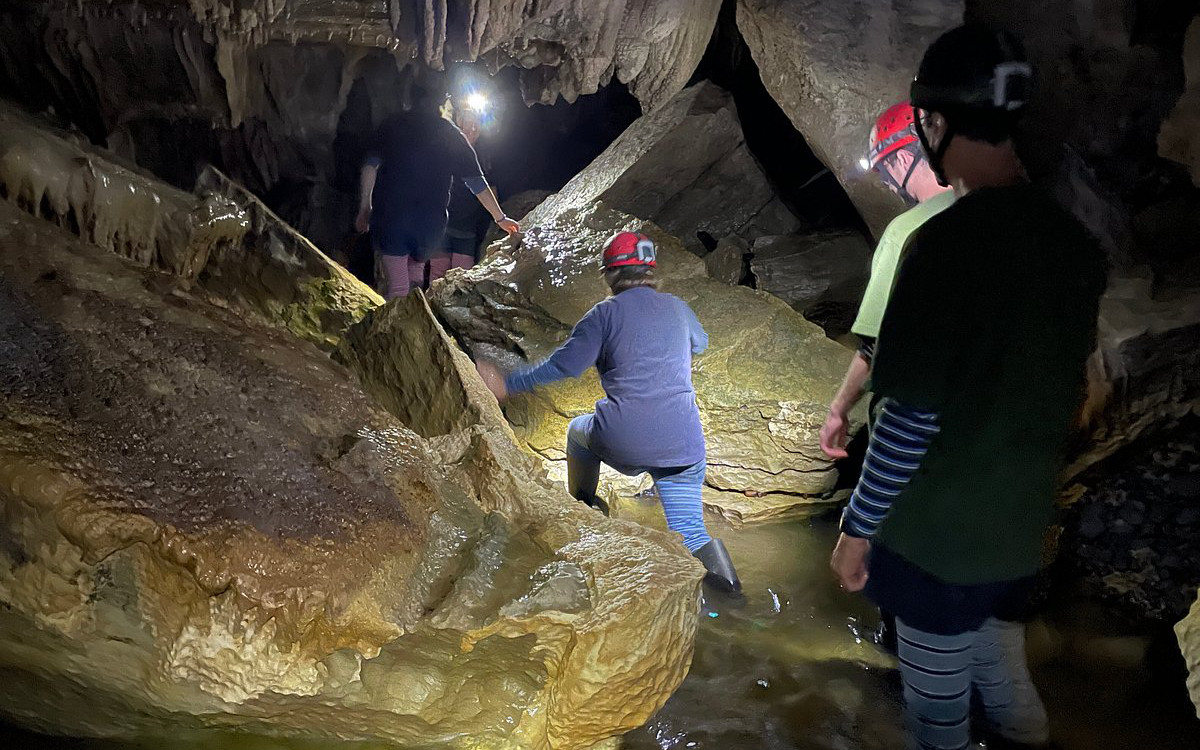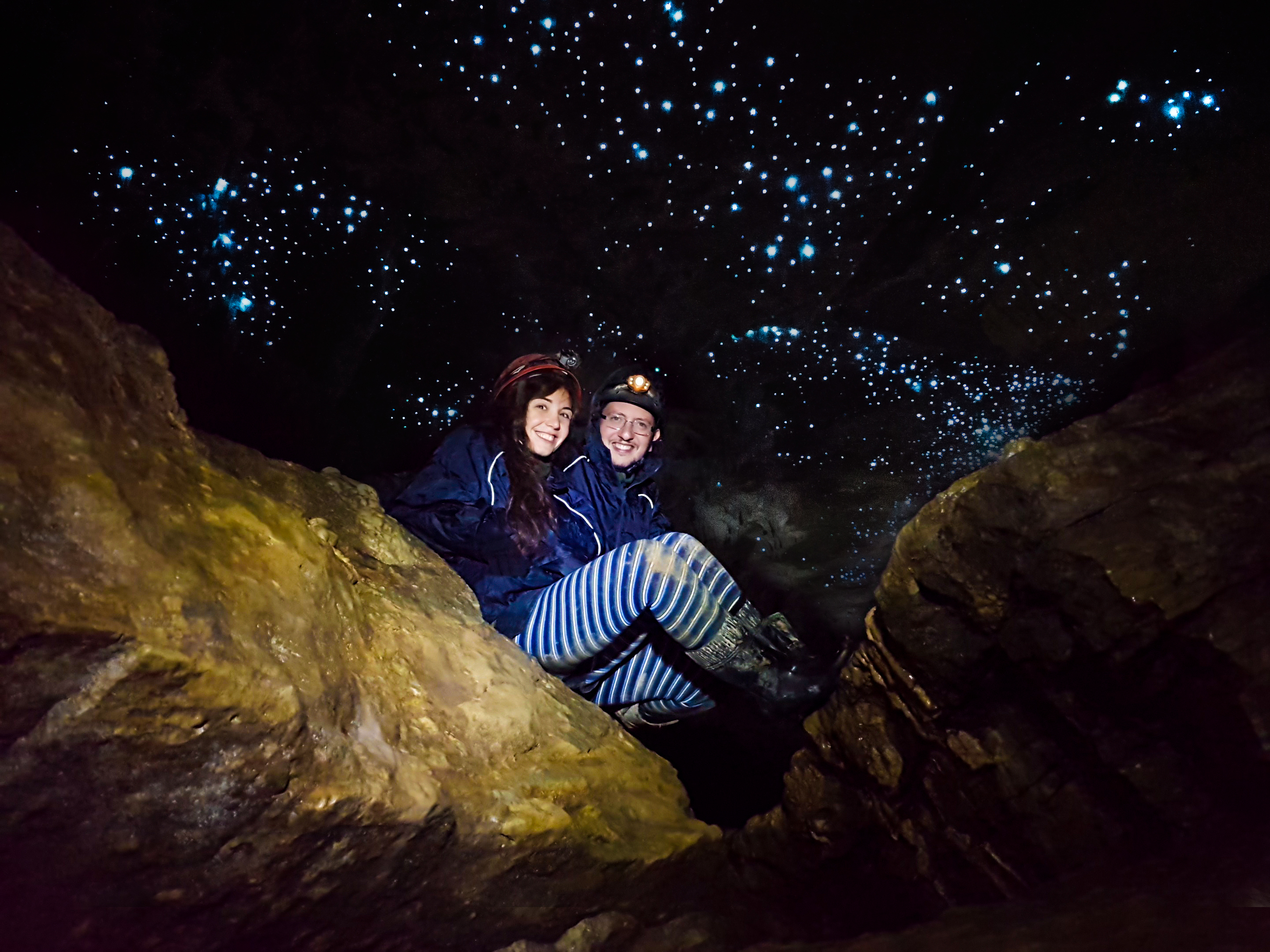
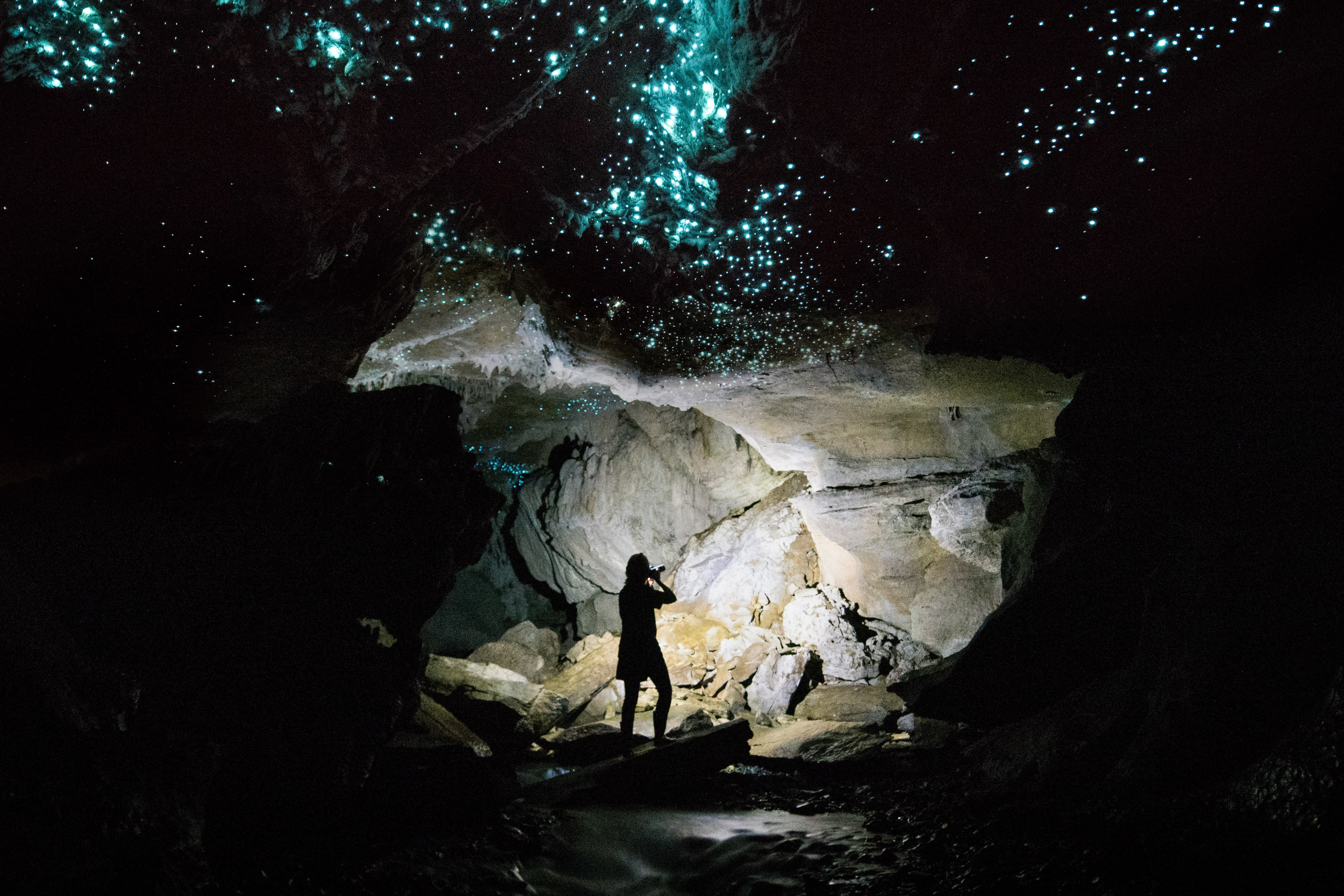
Sorry Tolkien fans… there isn’t one cave to rule them all — every cave has its own personality, and ours is a pretty special one.
Why Our Waitomo Cave Is So Special (and why “one cave = all caves” is a myth)
Did you know there are over 300 known caves in the Waitomo area?
That’s a lot of holes in the ground — and honestly, it’s pretty normal around here for someone to have a cave on their land… and their neighbour… and their neighbour’s neighbour too.
We grew up in this valley. We went to school just down the road. And like most country kids in the King Country in the ’80s, we spent weekends and after-school hours exploring limestone bluffs, sinkholes, gullies — and yes, plenty of caves.
So… are all caves equal?
And is it true that once you’ve seen one, you’ve seen them all?
A private farm with internationally significant karst
Down to Earth is based on the Boddie family farm, which has been in our family since 1912. From here, we’re lucky to have access to a rare cluster of karst features within the wider Mangapu Cave System landscape — an area recognised for its outstanding natural values.
On our land, you’ll find four main geological features:
-
Mangarongapu Cave (our main cave)
-
Lime Cave (a dry cave we use on rare occasions)
-
Mangapu Gorge (including a classic “blind valley” setting)
-
Pakeho Karst (a rare polygonal karst landscape, also used by the local climbing community)
These are the kinds of places that make geologists and cavers quietly lose their minds (in the best possible way).
The Mangapu Cave System: a legendary underground world
Our main cave, Mangarongapu Cave, is part of the wider Mangapu Cave System, which is around 4 km long and has been carved over millions of years by water flowing beneath the land.
In regional mapping work, the Mangapu Cave System is described as the second-largest underground river in the North Island.
So what does that mean for you as a visitor?
It means you’re not just stepping into a “pretty cave” — you’re entering a major natural system, with stream passages, ancient formations, and glowworms that would absolutely give this place five stars if they could rate their habitat. When the lights go out, their displays say it all — we’ve got happy glowworms.
Mangapu Gorge and the “blind valley” effect
Right in the middle of the Mangapu cave system — and right at the start of our tour — is Mangapu Gorge, which has been identified as a standout example of a blind valley feature in the Waitomo region.
A blind valley is basically a valley where a stream disappears underground into the limestone. It looks like it should keep going and then… it just doesn’t. The water has found a hidden route beneath your feet.
It’s one of those places that makes you stop and think, “How on earth did nature do this?” It’s also one of our favourite spots on the property — a real Jurassic-looking landscape that you have to see in person to fully appreciate.
Lime Cave is our quieter, dry cave
Just a very short stroll from Mangarongapu Cave is Lime Cave — and it feels like stepping into a different little world. Where the main cave moves with the water and energy, the Lime Cave is all about stillness.
It’s a fragile cave, with finer, more delicate formations than the main system — thin “straw” stalactites, and some incredible columns that make you pause and just stare for a moment.
And then there’s the surprise: a pure, crystal-clear lake at the end, with stalagmites growing beneath the water — it honestly feels like something out of a dream.
Because it’s so delicate, we only use Lime Cave on rare occasions — but we love having it here. It shows another side of Waitomo’s karst landscape, and it’s the perfect reminder that even caves right next door to each other can have completely different personalities.
Pakeho Karst: rare polygonal limestone country
Are these places protected?
Parts of this landscape on our farm are identified as an SNA — Significant Natural Area.
An SNA is a planning classification used in New Zealand to recognise areas with important natural values, and it comes with rules and guidance to help protect them.
In plain language: it’s official recognition that this place matters — not just to us, but environmentally and scientifically too. And we think that’s pretty cool.
It also means we take our role seriously. We work hard to look after this place from the underground up — pest control, planting trees, fencing waterways, and keeping our footprint low. We’re big on kaitiakitanga / tiaki: caring for this land so it stays healthy for the generations coming next.
The bottom line: not all Waitomo caves are the same
but the treasures hidden under these hills are honestly "glowingly" mind-blowing!
Ready to explore our private Waitomo glowworm caves?
If our little corner of Waitomo has you curious, we’d love to show you through — safely, in small groups, and with plenty of time to soak it all in.
Choose the Waitomo glowworm cave tour that suits you:
-
Off the Beaten Track Glowworm Cave Tour in Waitomo
Our most popular small-group adventure — real cave terrain, glowworms, and an authentic underground experience on our family farm. -
Private Waitomo Glowworm Cave Tour (Just Your Group + Guide)
Want the cave to yourselves? This is the best option for families, friends, and anyone who loves a more personal, unhurried adventure. -
Waitomo Glowworm Cave Photography Tour (Private Tour)
Made for photographers — bring your DSLR, tripod, and patience. We keep it private so you can take your time and get the shots you came for. -
Ultimate After-Hours Waitomo Glowworm Cave Tour (Private Night Experience)
The unhurried version of everything — after-hours, private, and extra magical. Perfect if you want the cave at its most peaceful, with time to really take it all in.
Whichever you choose, we provide all the gear (boots, socks, overalls, helmet, and lights) — you just bring your sense of adventure.
Until next time,
The Down to Earth family
Waitomo Eco Cave Tours
Featured Posts
Step into our family’s private Waitomo...
How a hidden climbing crag on our Waitomo...
If there’s one thing 2025 reminded us of,...